SKU: 10190Brand: Non-Specified Brand
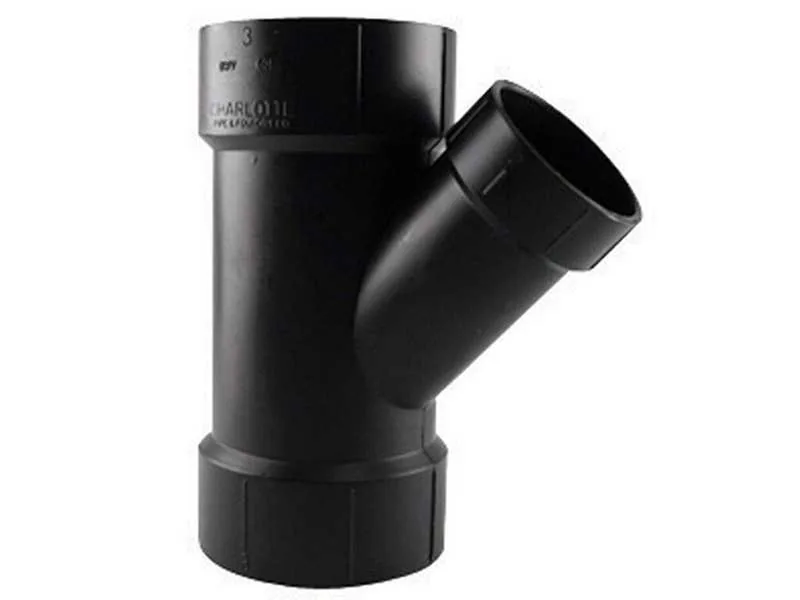
Industrial Parts, Industrial Parts & Accessories4 inch x 4 inch x 2 inch ABS DWV Reducing Wye Plastic x Plastic x Plastic
$9.03
4 Inch x 4 Inch x 2 Inch ABS DWV Reducing Wye – Solvent Weld for Drainage Systems The 4 inch x 4 inch x 2 inch ABS DWV Reducing Wye is a solvent-weld fitting used to connect branch lines to a main horizontal drain line at a 45-degree angle.
4 Inch x 4 Inch x 2 Inch ABS DWV Reducing Wye – Solvent Weld for Drainage Systems
The 4 inch x 4 inch x 2 inch ABS DWV Reducing Wye is a solvent-weld fitting used to connect branch lines to a main horizontal drain line at a 45-degree angle. The reducing branch allows transition from a 4-inch main to a 2-inch lateral, supporting smooth flow within gravity drainage, waste, and vent systems.
Product Features for DWV Applications
- ✅ABS Thermoplastic Construction– Impact-resistant and non-corrosive; maintains structural integrity across a range of indoor environmental conditions.
- ✅One-Piece Molded Body– Designed for seamless solvent welding, ensuring leak-free transitions between dissimilar pipe sizes.
- ✅Reduced Branch– Allows direct connection of smaller-diameter piping into larger systems without the need for multiple fittings.
- ✅45° Configuration– Minimizes turbulence and improves flow efficiency in horizontal drainage systems.
Technical Specifications
- MaterialAcrylonitrile Butadiene Styrene (ABS)
- Connection TypeHub x Hub x Hub (Solvent Weld)
- Nominal Sizes4 inch x 4 inch x 2 inch
- ApplicationDrainage, Waste, and Vent (DWV) systems
- StandardsConforms to ASTM D2665 and CSA B181.1
Common Installation Uses
This reducing wye is commonly installed in residential and commercial plumbing systems for the purpose of joining a smaller lateral drain line to a larger horizontal main. Applications include
- Connecting fixture drains to branch or building drains
- Integrating 2 inch branch lines from sinks, showers, or laundry units into a 4 inch main
- Allowing for directional change while maintaining laminar flow characteristics
Installation Notes
Install using approved solvent cement for ABS DWV applications. Ensure pipe ends are square-cut, deburred, and fully inserted into the socket to proper insertion depth. Use support per code to prevent movement and maintain alignment.
The 4 inch x 4 inch x 2 inch ABS DWV Reducing Wye is engineered for use in non-pressurized waste systems where directional changes and size reductions must be executed with consistent hydraulic performance and code compliance.
Specifications
| Brand | Non-Specified Brand |
|---|---|
| MPN | 2829 |